

One Person, One Vote: A Privilege We Should Never Take for Granted
By Dr. Juris Bunkis
Honorary Consul, Republic of Latvia in Southern California
Orange County Plastic Surgery, Corona del Mar/Newport Beach
I know something about the preciousness of the miracle of free elections.
My family comes from Latvia, a small European country that enjoyed independence before World War II. My parents were born in a free Latvia, but that freedom disappeared when Soviet forces occupied the country in 1940. For the next half-century, Latvians lived under communist rule, without the freedom to choose their own government. It was not until 1991 that Latvia regained its independence. Today, Latvia is a proud member of the European Union and NATO. In our recent parliamentary election, approximately 65% of eligible voters exercised their democratic right to choose their leaders.
Throughout most of human history, power belonged to kings, emperors, conquerors, aristocrats, and dictators. Ordinary citizens were expected to obey, pay taxes, fight wars, and remain silent. The American Revolution helped establish a revolutionary principle: government derives its legitimacy from the consent of the governed.
Think about what that means! We live in a country where presidents can be removed without revolutions, members of Congress dismissed without bloodshed, and governors sent packing without armies marching through the streets. A billionaire and a janitor, a celebrity and a schoolteacher, each possess precisely the same power when entering the voting booth.
One vote!
This past Tuesday, Americans participated in another midterm election. The enormous media attention before and after Election Day might suggest that everyone was excited about participating. Yet, historically, American voter turnout has been disappointingly low.
Since 1980, presidential elections have averaged approximately 63% turnout, while midterm elections have averaged closer to 48%. Even the unusually strong midterm participation in 2018 and 2022 left millions of eligible Americans on the sidelines. Approximately 49.4% of eligible Americans voted in last Tuesday’s midterm election—one of the strongest midterm participation rates in more than a century. Yet that still means that approximately half of eligible Americans did not exercise their right to vote!
Why don’t more people vote? Surveys of nonvoters reveal familiar explanations: lack of interest, busy schedules, dissatisfaction with candidates, illness, travel, and even simply forgetting Election Day!
Compare our participation with countries such as Belgium, Denmark, and Israel, where voter turnout frequently reaches substantially higher levels. Belgium does have compulsory voting, but Denmark demonstrates that high participation is possible without it.
We can do better! We can teach our children the importance of democracy, educate ourselves about candidates and issues, take advantage of early and mail-in voting, and encourage friends and neighbors to participate. We can also recognize that voting is not merely an opportunity to express dissatisfaction—it is a responsibility to help shape our country’s future.
As someone whose family lost its freedom for 50 years, I find it difficult to understand how anyone could willingly surrender this extraordinary privilege.
Democracy is not a spectator sport. Our vote is our voice. Let’s use it!

I voted!
Your Surgery Is Over—But Your Care Doesn't End There
By Dr. Deborah Ekstrom
Orange County Plastic Surgery, Corona del Mar/Newport Beach
This Week's Plastic Surgery Quiz
Why are regular follow-up visits important after plastic surgery, even when a patient feels perfectly fine?
At Orange County Plastic Surgery, we believe that excellent surgical care begins long before an operation and continues well after the incisions have healed.
Following the initial consultation, we encourage patients to return as often as necessary to discuss alternatives, review expectations, and have every question answered. We never want anyone to feel rushed into a decision.
Once surgery is scheduled and the necessary laboratory tests and medical evaluations are completed, every patient returns for a comprehensive preoperative visit. We review the procedure, postoperative care, medications, and recovery instructions. Patients are advised which medications and supplements, including aspirin and ibuprofen, may need to be discontinued because of bleeding risks. We also review which prescribed medications should be taken on surgery day, with a small sip of water, and provide specific fasting instructions.
We make certain patients have transportation home, understand approximately when they will be discharged, and know how to care for themselves during recovery.
Our postoperative visits are equally important. For example, facelift patients typically go home wearing a large cotton dressing resembling a football helmet, with small drains behind their ears. We see these patients the very next day, regardless of whether that means coming into the office on Saturday or Sunday! The heavy dressing is removed and replaced with something lighter, which usually comes off the following day, allowing patients to shower and shampoo their hair.
Subsequent visits are scheduled according to individual needs.
We like to see every patient at least one year following surgery. Some procedures, such as rhinoplasty and labiaplasty, generally produce relatively stable long-term results once healing is complete. Others, including facelifts, brow lifts, and breast lifts, continue to be affected by aging, gravity, and changes in weight.
We particularly encourage annual examinations for patients with breast implants. These visits allow us to assess implant position, breast appearance, and possible complications. Patients should also continue age-appropriate mammograms. For silicone implants, the FDA recommends ultrasound or MRI screening beginning five to six years after placement and every two to three years thereafter.
Unfortunately, just as many Americans neglect their opportunity to vote, many patients neglect their complimentary annual postoperative examinations. They feel fine, look great, and assume there is no reason to return.
But prevention and early detection are always preferable to discovering a problem years later!
Your surgery may have taken only a few hours, but our commitment to your well-being extends far beyond the operating room. Please take advantage of your follow-up visits. We would love to see you!

Last Monday’s Mommy Makeover patient, on third day after her procedure, exceedingly happy with her results. (Dr. Juris Bunkis of Orange County Plastic Surgery was the lead surgeon in this case.)
Interested in a follow up following a prior procedure? CLICK HERE to set up an appointment with Dr. Ekstrom to explore your options.
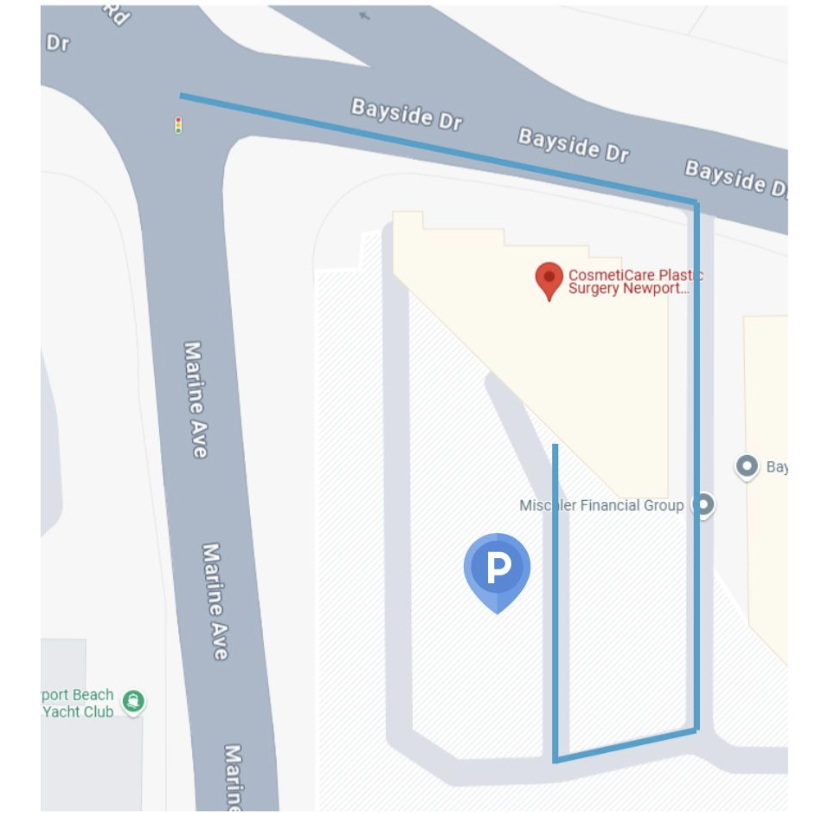
Orange County Plastic Surgery at CosmetiCare
1101 Bayside Drive, Suite 200
Corona del Mar, CA 92625
Take the elevator to the second floor (Suite 200) and check in with the front desk for your consultation or follow-up.
Free Parking Available.

